
Face reading · Features
Ears
Governs: early life (1-14), kidney health, longevity
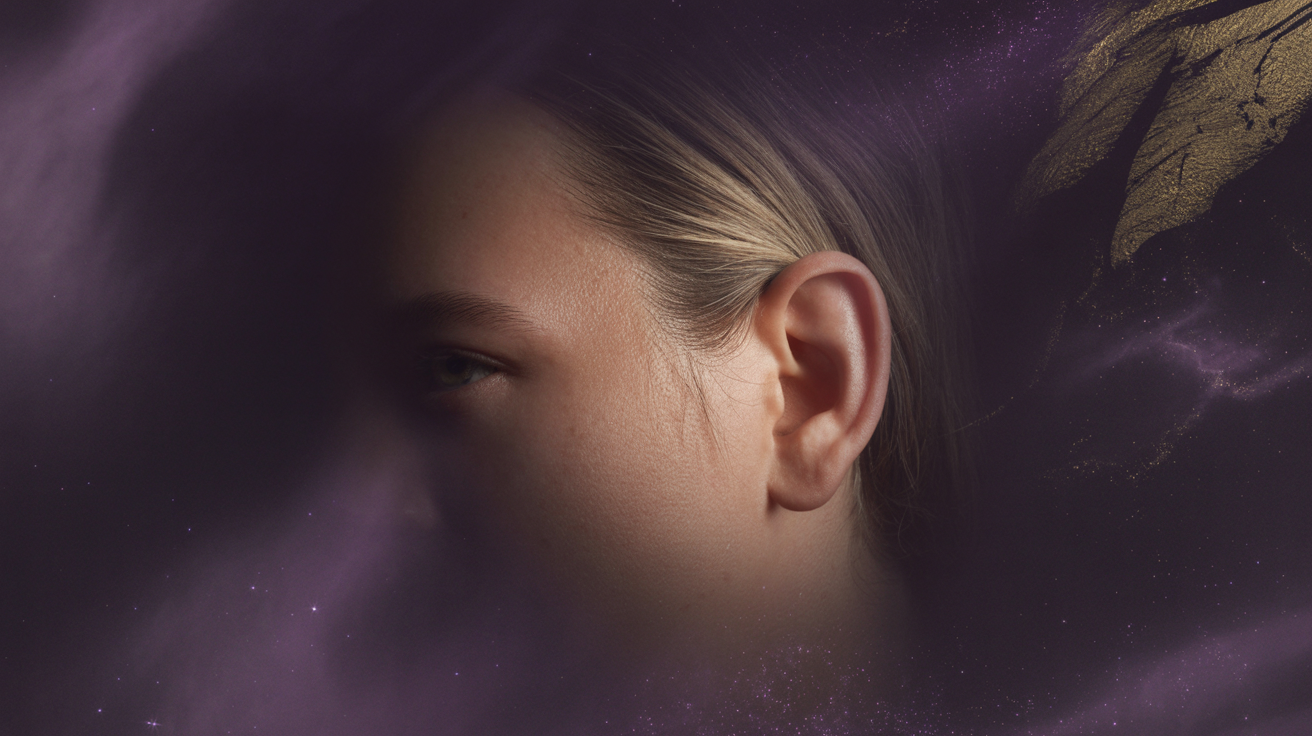
In Mian Xiang
side of head; karma, inheritance, listening capacity.
Variations & what they reveal
large
long life, good listener, wise
small
independent, decisive, skeptical of advice
attached lobes
family-oriented, traditional values
detached lobes
free-spirited, progressive, breaks tradition
high (above eyebrow)
intellectual, analytical, leader
low (below eyebrow)
practical, hands-on, present
Ears in Mian Xiang: A Guide to Reading the Quiet Listeners of the Face
In the long tradition of Chinese face reading, the ears are some of the most telling features on the entire head — and yet they are the ones most people forget to look at. We grow up checking our reflection’s eyes, mouth, and skin, but who studies their own ears in the mirror? In Mian Xiang, this oversight is almost poetic. Ears govern what is hidden, inherited, and quietly absorbed. They speak of the years before you had words for yourself.
Let me walk you through how a practitioner reads them, and what your ears might reflect back to you.
What the Ears Govern
In classical Mian Xiang, each feature on the face rules a “palace” or domain of life. The ears are tied to three big themes:
- Early life, ages 1 through 14. The left ear traditionally covers the first seven years for men (right ear for women), and the opposite ear covers ages 8 to 14. Practitioners read the ears as a record of childhood — not what will happen, but what was absorbed.
- Kidney energy and longevity. In Traditional Chinese Medicine, the ears are the external bloom of the kidneys, which store the body’s deep vitality (jing). Strong, well-formed ears are read as a sign of strong constitutional roots.
- Karma, inheritance, and listening capacity. The ears sit on the side of the head, away from the face we present to the world. They represent what we receive rather than what we project — family lineage, ancestral patterns, and the ability to truly hear others.
When a Mian Xiang reader studies your ears, they are looking at the soil you grew in, not the flower you have become.
How to Read the Ears
Before you study any single feature, take in the whole ear. A good reading moves from large to small.
Step 1: Compare the ear to the face
Hold up a finger and check where the top of the ear sits relative to the eyebrow, and where the lobe sits relative to the tip of the nose. This tells you whether the ear sits high, middle, or low on the head.
Step 2: Look at size and proportion
Are the ears large relative to the face, or small and close-set? Neither is “better” — each tells a different story.
Step 3: Check the lobe
Is it long and full, short and tucked, attached directly to the jaw, or detached and hanging free?
Step 4: Notice color and texture
In Mian Xiang, ears that are slightly lighter than the face are considered a sign of good kidney vitality. Reddish ears suggest heat or excitement; very pale ears can suggest depletion. (This is a snapshot of the moment, not a verdict.)
Step 5: Compare left and right
Small differences are normal. Large differences may suggest that early childhood and later childhood felt very different — useful for self-reflection.
What Each Variation Reveals
Remember: every ear shape carries its own dignity. There are no “lucky” ears and “unlucky” ears, only different stories.
Large Ears
Large ears (extending past the brow line at top and the nose tip at bottom) traditionally suggest a person who absorbs a great deal from their environment. As a child, you may have been the family observer — the one who picked up on everything, even what wasn’t said out loud. Large ears point to deep listening capacity and, in TCM terms, robust kidney essence. Ask yourself: do I still give myself permission to take in the world this fully, or have I learned to tune things out?
Small Ears
Small, neatly shaped ears suggest a person who is selective with what they let in. Childhood may have required focus over openness — perhaps you learned early to filter strong influences. Small ears are often read as a sign of independent thinking. The reflective question: what voices have I been screening out, and which ones might I want to let back in?
Attached Lobes
When the lobe blends smoothly into the jaw without hanging free, Mian Xiang reads this as a person closely tied to family and community expectations. You may move through the world with a strong sense of duty and connection. The shadow side: it can be hard to know where your family’s voice ends and yours begins. Worth asking: which beliefs are truly mine?
Detached Lobes
A lobe that hangs free of the jaw — especially a long, full one — is the famous “Buddha lobe.” Tradition links this to longevity, generosity, and a certain spaciousness in life. It often suggests someone who can hold their own opinions apart from the crowd. Reflective question: am I using that independence well, or do I sometimes drift too far from people who care about me?
High Ears (Above the Eyebrow)
When the top of the ear sits above the eyebrow line, this is read as a sign of early intelligence and strong intuition in childhood. You likely picked things up quickly. The question for adulthood: have I kept feeding that quick mind, or has it gotten bored?
Low Ears (Below the Eyebrow)
When the top of the ear sits below the brow, traditional Mian Xiang reads this as a more grounded, sensory, body-led temperament. Knowledge came through experience rather than abstraction. The reflective question: do I trust my gut wisdom, or have I been talked out of it by people who speak more loudly?
How Ears Interact With Face Shape
Mian Xiang never reads a feature in isolation. Ears are seasoned by the face they sit on.
- Round face + large ears: A doubled emphasis on receptivity and warmth. The person likely takes in a lot emotionally. Good boundaries are the growth edge.
- Square face + small ears: Focus and decisiveness reinforce each other. Watch for becoming too narrow in your inputs.
- Long face + low ears: A deeply contemplative combination. You think long and feel deep. Action can feel harder than reflection.
- Heart-shaped face + detached lobes: Independence paired with sensitivity. You feel things sharply but want to chart your own course.
- Oval face + balanced ears: Often read as harmonious — the early-life “soil” matched the personality that grew from it.
Frequently Asked Questions
Can ears change over a lifetime?
The bone structure stays mostly the same, but ears do soften, lengthen, and change color with age. In Mian Xiang, lobes that grow fuller over the years are read as a sign of accumulating life wisdom — which is why so many statues of elders show long, generous lobes.
What if my two ears look quite different?
This is more common than people think. Tradition suggests it reflects a contrast between very early childhood (under 7) and later childhood (8–14). It is an invitation to look at how those two chapters shaped you differently — not a flaw.
Do ears predict how long I will live?
No. Mian Xiang is a mirror, not a forecast. Ears reflect constitutional vitality and how you have cared for it so far. Sleep, stress, and self-knowledge shape your longevity far more than any single feature. Read your ears for insight, not for prophecy.
Read your full face
Mian Xiang reads nine features at once. AI gives you the full reading in 30 seconds.
Read my face — free →